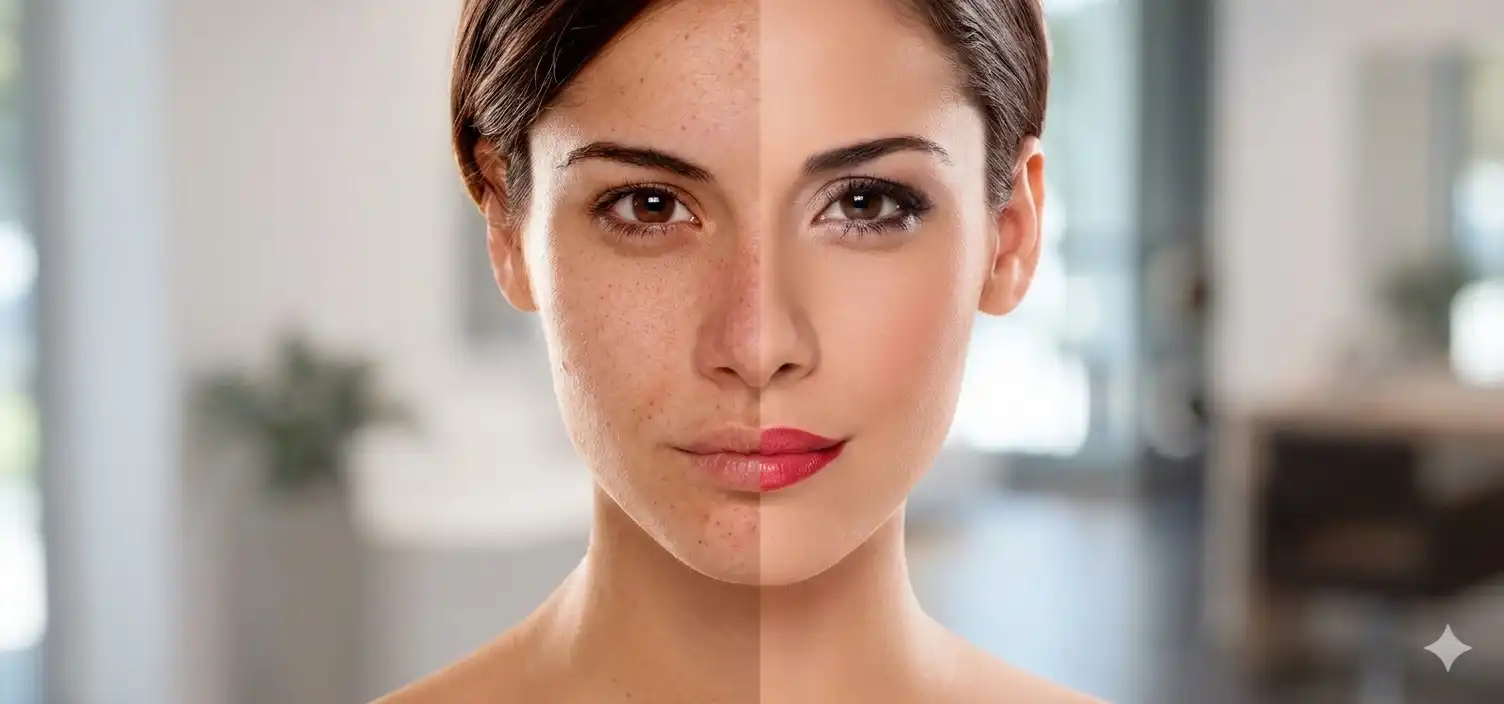
There's a particular feeling most of us recognize — looking in the mirror and thinking your skin just doesn't look like itself anymore. Maybe it's lost its glow. Maybe it looks tired even when you're well-rested. Maybe the texture feels rough, the tone has become uneven, or the skin just seems to have aged faster than you expected.
This is exactly the problem that skin rejuvenation treatments are designed to solve. Not surgery, not dramatic procedures — but targeted, science-backed treatments that restore your skin to its healthiest, most radiant state.
In this blog, we explain what skin rejuvenation actually means, why skin loses its vitality in the first place, what treatments are available, and how you can choose the right approach for your specific skin concerns.
What Is Skin Rejuvenation?
Skin rejuvenation is a broad term that refers to a category of treatments designed to restore and refresh the appearance of the skin. The word 'rejuvenation' literally means to make young again — and that's precisely what these treatments aim to do.
Rather than addressing a single issue like acne scars or pigmentation, skin rejuvenation takes a more holistic approach. It targets multiple signs of skin aging, environmental damage, and dullness at once — improving overall skin quality, radiance, texture, and tone.
Skin rejuvenation is not about changing how you look. It's about helping your skin look and function the way it should — healthy, glowing, and full of life.
Why Does Skin Lose Its Glow?
Before jumping into treatments, it helps to understand why skin becomes dull, tired-looking, or aged in the first place. There are several culprits:
Slow Cell Turnover
Young skin renews itself approximately every 28 days. As we age, this cycle slows to 45, 60, even 90 days. Dead skin cells accumulate on the surface, making it look rough, dull, and grey rather than bright and fresh.
Collagen and Elastin Decline
From our mid-20s, our skin produces progressively less collagen and elastin. These are the structural proteins that give skin its firmness, bounce, and plumpness. Without enough collagen, skin becomes looser, fine lines deepen, and the skin loses its youthful resilience.
Sun Damage (Photoaging)
UV radiation is one of the most powerful accelerators of skin aging. It breaks down collagen, stimulates excess melanin production (causing dark spots), and damages the skin barrier. Sun damage accounts for a significant portion of visible premature aging.
Pollution and Environmental Stress
Air pollution generates free radicals that damage skin cells, cause inflammation, and impair the skin barrier. People in urban environments like Hyderabad are particularly exposed to this kind of environmental skin stress.
Dehydration and Nutritional Deficiencies
Skin that lacks adequate hydration appears dull, tight, and more wrinkled. Nutritional deficiencies — particularly in vitamins C, E, and D — can impair skin health and radiance.
Stress and Poor Sleep
Chronic stress and inadequate sleep interfere with the skin's natural repair cycle. During sleep, the skin goes into regeneration mode. Disrupted sleep shows on your face — in puffiness, dullness, and premature lines.
Who Needs Skin Rejuvenation Treatment?
Skin rejuvenation is appropriate for a wide range of people and concerns. You may benefit from skin rejuvenation if you have:
- Dull, lifeless, or grey-looking skin
- Uneven skin tone or patchy complexion
- Mild to moderate pigmentation and sun spots
- Fine lines and early wrinkles
- Rough skin texture or enlarged pores
- Post-acne marks and uneven skin surface
- Tired-looking skin despite adequate sleep
- Loss of skin firmness and subtle sagging
- Generally aged or fatigued skin appearance
Skin rejuvenation is not just for older patients. Young adults in their 20s and 30s seek it for brightness and clarity, while patients in their 40s and 50s use it to address more visible aging changes. There's truly no wrong age to invest in your skin's health.
Skin Rejuvenation Treatments: What Are Your Options?
There is no single 'skin rejuvenation treatment' — it's a category that includes several different procedures, often used in combination for the best results. Here's an overview of the most effective options:
1. HydraFacial
HydraFacial is one of the most popular skin rejuvenation treatments worldwide, and for good reason. It's a multi-step treatment that simultaneously cleanses, exfoliates, extracts impurities, and infuses the skin with hydrating and nourishing serums — all in one session.
It is suitable for all skin types, has zero downtime, and leaves skin visibly brighter and smoother immediately after treatment. It's an ideal choice for a special occasion or simply for a regular skin maintenance boost.
2. Chemical Peels
Chemical peels remove the damaged outer layers of skin, revealing fresher, brighter skin underneath. They improve tone, texture, pigmentation, fine lines, and dullness. Different strengths are available depending on how deep the treatment needs to go, and they are one of the most versatile skin rejuvenation tools in a dermatologist's kit.
3. Laser Skin Rejuvenation
Laser treatments deliver controlled energy to target specific skin concerns. Fractional lasers create thousands of tiny treatment zones in the skin, stimulating collagen remodeling and improving texture, tone, and pigmentation. Non-ablative lasers work below the skin's surface to boost collagen without removing the outer layer — with little to no downtime.
4. Microneedling (Collagen Induction Therapy)
Microneedling uses a device with very fine needles to create controlled micro-channels in the skin. This triggers the body's healing response, stimulating collagen and elastin production. The result is smoother, firmer skin with improved texture, reduced pores, and a refreshed appearance. Microneedling pairs beautifully with PRP for enhanced results.
5. PRP (Platelet-Rich Plasma) Facial
Often called the 'vampire facial,' PRP involves extracting a small sample of your own blood, spinning it to concentrate the growth factors, and applying or injecting it into the skin. The growth factors stimulate collagen production, accelerate cell renewal, and give the skin a genuine youthful glow. It is entirely natural, using your own biology to rejuvenate your skin.
6. Radiofrequency (RF) Skin Tightening
Radiofrequency treatments deliver heat energy into the deeper layers of skin, stimulating collagen contraction and new collagen formation. The result is firmer, tighter skin with improved elasticity. RF is particularly effective for mild to moderate skin laxity on the face, neck, and jawline. There is no downtime and results improve progressively over 2 to 3 months.
7. Mesotherapy
Mesotherapy involves injecting a customized cocktail of vitamins, hyaluronic acid, amino acids, and other skin-nourishing ingredients directly into the middle layer of the skin. It intensely hydrates, brightens, and revitalizes the skin from within. It's particularly popular for dull, dehydrated skin that looks tired.
8. Medical-Grade Facials and Skin Boosters
Beyond in-clinic procedures, a dermatologist can also prescribe professional-grade topical treatments and skin booster injections (like Profhilo or Restylane Skin Boosters) that deeply hydrate and improve skin quality over time.
Combining Treatments for Maximum Rejuvenation
The most powerful skin rejuvenation results often come from combining treatments thoughtfully. For example:
- Chemical peel + PRP: Deep exfoliation followed by growth factor infusion for accelerated renewal
- Microneedling + Mesotherapy: Collagen stimulation combined with deep nutrient delivery
- RF tightening + Fillers: Skin tightening combined with volume restoration for comprehensive anti-aging
Your dermatologist will recommend combinations based on your skin's specific needs and your treatment goals.
What to Expect: Before, During & After Skin Rejuvenation
Before Treatment
Your dermatologist will perform a thorough skin analysis and discuss your concerns and goals. Depending on the treatment chosen, you may be advised to avoid sun exposure and certain skincare products in the days leading up to your session.
During Treatment
Most skin rejuvenation treatments are comfortable. Some produce mild warmth or tingling. Sessions typically last between 30 to 90 minutes depending on the procedure.
After Treatment
Most treatments have minimal to no downtime. Mild redness or sensitivity is common and resolves within a day or two. Your dermatologist will give you specific aftercare instructions, which typically include gentle skincare, sun avoidance, and broad-spectrum SPF.
Results
Results depend on the treatment used. Some procedures like HydraFacial show immediate improvement. Others like laser resurfacing and Microneedling show progressive improvement over several weeks as collagen remodeling occurs. A series of treatments is usually recommended for best results.
Skin Rejuvenation at Veda Skin & Hair Clinic
When your skin has lost its glow and you are ready to do something meaningful about it, you need more than a good face wash — you need expert hands and proven treatments. At Veda Skin Hair & Aesthetic Center in Kompally, Hyderabad, skin rejuvenation is not a one-size-fits-all service. Dr. Radha Penumatsa, MD in Dermatology, Venereology & Leprosy, is one of the most trusted dermatologists in Kompally who begins with a detailed skin analysis, understands your lifestyle and concerns, and designs a customized rejuvenation plan that addresses the root causes of your skin's dullness or aging. As a leading skin care clinic in Kompally, Veda Skin & Hair Clinic has the expertise and technology to deliver real, visible results - whether you need a single glow-boosting treatment or a comprehensive multi-step rejuvenation program.
Conclusion
Your skin works hard every single day — protecting you from the sun, pollution, temperature changes, and the natural process of time. It deserves care that goes beyond surface-level products.
Skin rejuvenation treatments give your skin the deep, professional attention it needs to reset, renew, and restore its natural vitality. Whether you are dealing with dullness, uneven tone, fine lines, rough texture, or simply want to look as fresh as you feel — there is a rejuvenation treatment that can make a visible, meaningful difference.
The first step is the easiest one: book a consultation. Let a qualified dermatologist assess your skin and show you exactly what's possible.
Frequently Asked Questions (FAQs)
Q1. What is the best skin rejuvenation treatment for dull skin?
For dull skin, HydraFacial, chemical peels, and PRP therapy are among the most effective options. The best choice depends on your specific skin condition, sensitivity, and goals. A consultation with a dermatologist will help identify the ideal treatment for you.
Q2. How many sessions of skin rejuvenation do I need?
It varies by treatment. HydraFacial can show results in a single session. Chemical peels typically require 4 to 6 sessions. Microneedling and laser rejuvenation usually need 3 to 5 sessions. Your doctor will recommend a treatment plan based on your skin's needs.
Q3. Is skin rejuvenation safe for all skin types?
Most skin rejuvenation treatments are safe for all skin types, including Indian skin tones, when performed by a qualified dermatologist. The key is customization — the right treatment at the right intensity for your skin. An experienced doctor will ensure safety and effectiveness for your specific skin type.
Q4. How long do skin rejuvenation results last?
Results vary by treatment. A single HydraFacial typically lasts 4 to 6 weeks. A series of chemical peels, lasers, or microneedling sessions can produce results lasting 6 months to a year or more. Maintenance treatments help preserve and build on results over time.
Q5. Is there any downtime with skin rejuvenation treatments?
Most modern skin rejuvenation treatments are designed with minimal downtime. HydraFacial, mesotherapy, and light peels have virtually no downtime. Laser treatments and deeper chemical peels may involve 3 to 7 days of mild redness and peeling. Your doctor will advise you on what to expect before your treatment.
Q6. Can skin rejuvenation treat dark spots and pigmentation?
Yes. Chemical peels, laser treatments, and PRP therapy all help reduce pigmentation and dark spots as part of their rejuvenating effect. For more targeted pigmentation treatment, your dermatologist may recommend a specific protocol.
Q7. Can I do skin rejuvenation if I have sensitive skin?
Yes, sensitive skin can be treated with skin rejuvenation, but it requires a gentler approach. Treatments like HydraFacial, mild peels, and mesotherapy are well-tolerated by sensitive skin. Your dermatologist will choose appropriate treatments and concentrations based on your skin's sensitivity.
Q8. What should I avoid after a skin rejuvenation treatment?
Avoid direct sun exposure, heavy makeup, harsh exfoliants, and hot water on the treated area for at least 24 to 48 hours. Always apply sunscreen after any rejuvenation treatment. Your doctor will provide detailed aftercare instructions specific to your treatment.