
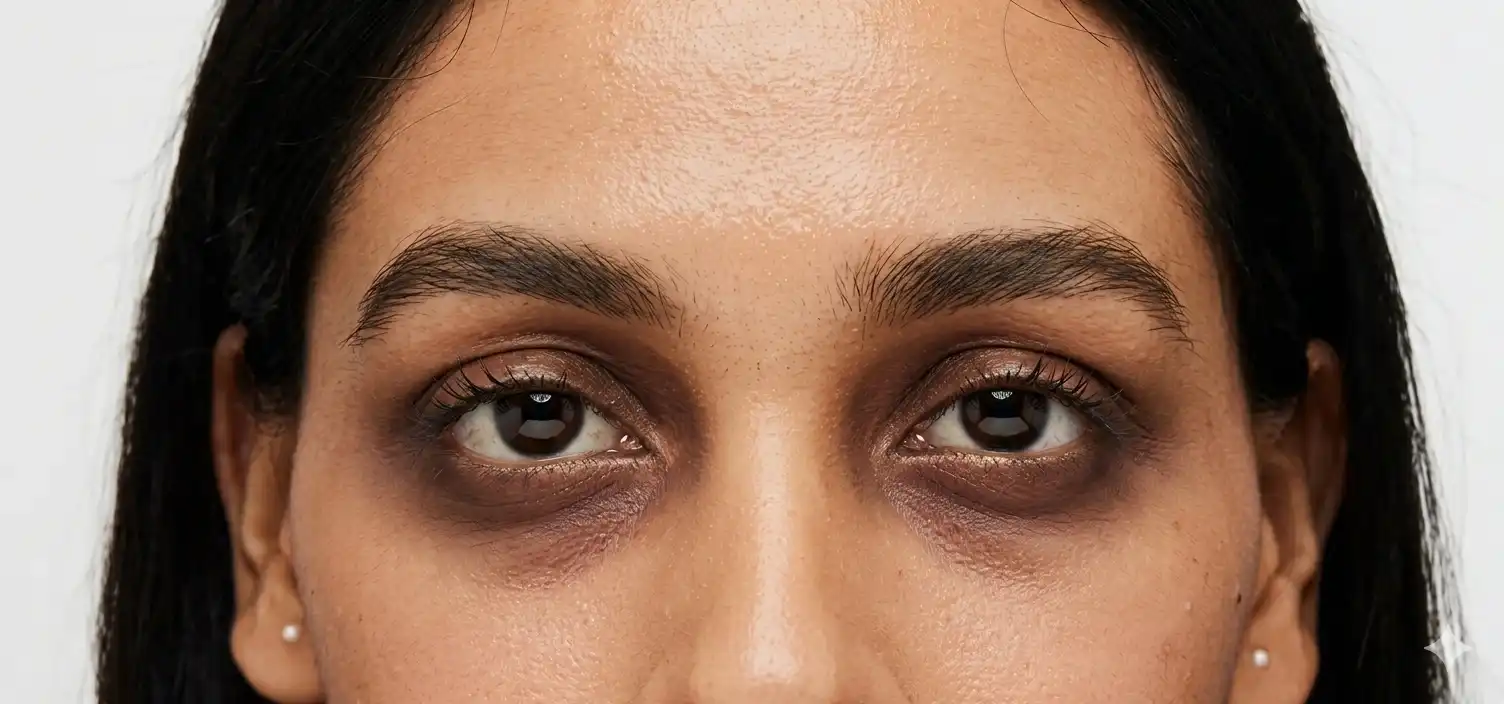
You get enough sleep. You drink water. You've tried every under-eye cream on the market. And still, every morning, those dark shadows under your eyes make you look exhausted, older, or just not quite like yourself. Sound familiar?
Dark circles are one of the most common cosmetic complaints we hear at dermatology clinics, and also one of the most misunderstood. The reason so many people struggle to treat them is simple — they are treating the symptom without understanding the cause. Dark circles are not all the same. They have different causes, and each cause requires a different treatment approach.
In this blog, we explain the real reasons behind dark circles, why most creams fall short, and what clinical treatments can actually make a visible, lasting difference.
What Are Dark Circles?
Dark circles, medically known as periorbital hyperpigmentation or periorbital melanosis, refer to the darkening of the skin beneath and around the eyes. The skin in this area is the thinnest on the entire face — just 0.5mm thick compared to 2mm elsewhere. This thinness makes it uniquely susceptible to showing discoloration, shadowing, and structural changes underneath.
Because the causes vary so much from person to person, it is entirely possible for two people with dark circles to need completely different treatments to see improvement.
Types of Dark Circles and What Causes Each
Understanding which type of dark circles you have is the most important step toward treating them effectively. There are four main types:
1. Pigmentary Dark Circles
This is the most common type among people with darker skin tones, including Indians. It is caused by excess melanin (pigment) deposited in the under-eye skin. The circles appear brown to dark brown in color and often have a well-defined border.
Common triggers include sun exposure without eye protection, excessive eye-rubbing, contact dermatitis from cosmetics, and genetic predisposition. Many people inherit this tendency from their parents, which is why dark circles can appear even in young children.
2. Vascular Dark Circles
This type appears bluish or purplish under the eyes. It is caused by the visibility of blood vessels through the very thin under-eye skin. Factors like fatigue, poor sleep, dehydration, alcohol, and allergies cause these vessels to dilate and become more prominent.
Vascular dark circles are often worse in the morning and improve somewhat during the day. They are also more common in people with naturally pale or thin skin.
3. Structural Dark Circles (Tear Trough Depression)
This type is caused not by pigment or blood vessels but by the loss of volume and fat in the under-eye area. As we age, the fat pads beneath the eyes diminish, creating a hollow groove called the tear trough. This hollow casts a shadow that makes the area look dark even when the skin itself is not pigmented.
Structural dark circles are particularly challenging to treat with creams alone because no topical product can restore lost volume. They require a volumizing approach.
4. Mixed Dark Circles
Many people have a combination of pigmentation, vascular, and structural components all contributing to their dark circles. This is why a thorough assessment by a dermatologist is so important — the treatment plan needs to address all contributing factors.
Why Most Under-Eye Creams Don't Work Well Enough
Most over-the-counter under-eye creams contain ingredients like caffeine, vitamin K, niacinamide, vitamin C , or retinol — all of which can be mildly helpful for certain types of dark circles. However, there are real limitations:
- Creams have limited penetration into the deeper layers where most dark circles originate
- They cannot restore lost volume in structural dark circles — no cream can
- For vascular dark circles, surface-level ingredients cannot address dilated blood vessels underneath
- Results from creams are subtle and take months to become noticeable
- Stopping the cream typically means the benefit gradually reverses
This does not mean under-eye creams are useless — they can complement professional treatment very well. But for visible, meaningful improvement, clinical treatments are in a different league.
Clinical Treatments for Dark Circles That Deliver Real Results
1. Tear Trough Fillers — For Structural Dark Circles
Tear trough fillers use hyaluronic acid to restore the volume lost in the under-eye hollow. By filling the tear trough depression, the shadow disappears and the under-eye area looks rested and refreshed. The results are immediate and typically last 12 to 18 months.
Tear trough filler is considered one of the most effective treatments for structural dark circles and is performed by experienced aesthetic dermatologists. It is a minimally invasive procedure with little to no downtime.
2. Chemical Peels — For Pigmentary Dark Circles
Superficial chemical peels using ingredients like glycolic acid, lactic acid, or kojic acid can reduce pigmentation in the under-eye area over a series of sessions. They work by exfoliating the pigmented outer layers and stimulating cell renewal. Multiple sessions are typically needed, and the results are gradual but meaningful.
3. Laser Treatment — For Both Pigmentary and Vascular Dark Circles
Laser treatments like Q-switched Nd:YAG, fractional lasers, and pulsed dye lasers can precisely target either excess pigment or the dilated blood vessels causing vascular dark circles. Laser is one of the most effective options for stubborn pigmentary dark circles in Indian skin when used with appropriate settings by an experienced dermatologist.
4. Platelet-Rich Plasma (PRP) Therapy
PRP therapy involves injecting concentrated growth factors derived from your own blood into the under-eye area. The growth factors stimulate collagen production, improve skin texture, and strengthen the thin under-eye skin — reducing the visibility of both pigmentation and blood vessels. Many patients notice significant brightening and improved skin quality after a series of PRP sessions.
5. Microneedling
Microneedling creates micro-channels in the under-eye skin, triggering collagen and elastin production. It thickens the thin skin, reducing the show-through of underlying vessels and improving overall skin quality. When combined with growth serums or PRP, it produces enhanced brightening results.
6. Topical Prescription Agents
A dermatologist may prescribe medical-grade topical treatments containing higher concentrations of ingredients like hydroquinone, azelaic acid, kojic acid, or tretinoin that are not available over the counter. These are particularly effective for pigmentary dark circles when used as part of a comprehensive treatment plan.
7. Combination Approach
In most cases, the best results come from combining treatments. For example, tear trough filler for volume correction combined with a laser or chemical peel for pigmentation gives a comprehensive improvement that neither treatment alone could achieve. Your dermatologist will design the right combination for your specific type of dark circles.
Lifestyle Factors That Worsen Dark Circles
While clinical treatment is the most effective approach, certain lifestyle habits can worsen dark circles and undermine treatment results:
- Chronic sleep deprivation — causes fluid retention and vessel dilation under the eyes
- Excessive screen time — causes eye fatigue and encourages rubbing
- Sun exposure without sunscreen or sunglasses — worsens pigmentary dark circles
- Dehydration — makes under-eye skin look more sunken and dark
- Smoking and alcohol — impair circulation and skin health, worsening vascular dark circles
- Allergies and nasal congestion — cause venous congestion and darkening under the eyes
Addressing these factors alongside professional treatment gives you the best long-term results.
Dark Circles Treatment at Veda Skin & Hair Clinic, Kompally, Hyderabad
If you have been battling dark circles for years and feel like nothing works, you may simply have been using the wrong treatment for your type of dark circles. At Veda Skin Hair & Aesthetic Center in Kompally, Hyderabad, dark circles are approached the right way — with proper diagnosis first and customized treatment second. Dr. Radha Penumatsa, MD in Dermatology, Venereology & Leprosy, is a highly experienced dermatologist in Kompally who understands the nuances of Indian skin and carefully assesses the underlying cause before recommending a plan - whether that means fillers, lasers, PRP, or a combination approach. As a trusted skin care clinic in Kompally, Veda Skin & Hair Clinic offers the full range of dark circle treatments — all performed with precision and care. With 25,000+ patients treated and a 99% satisfaction rate, Dr. Radha and the team at Veda are here to help you look and feel your best.
Conclusion
Dark circles under the eyes are not simply a problem of not sleeping enough or not drinking enough water. They are a genuine dermatological concern with multiple possible causes — and each cause has an effective treatment.
The most important step is understanding what is actually causing your dark circles, which is something a qualified dermatologist can determine in a single consultation. Once you know the cause, you can finally treat it correctly and see results that creams alone could never provide.
Frequently Asked Questions (FAQs)
Q1. Can dark circles be permanently removed?
It depends on the type. Structural dark circles treated with fillers can be maintained long-term with repeat sessions. Pigmentary dark circles treated with laser or peels can see long-lasting improvement, especially when combined with sun protection and a good skincare routine. Vascular dark circles can be significantly reduced with the right treatments and lifestyle adjustments. Maintenance is key for sustained results.
Q2. Are tear trough fillers safe?
Yes, tear trough fillers are safe when performed by a trained and experienced aesthetic dermatologist. Hyaluronic acid fillers are reversible if needed. The key is choosing a qualified doctor — the under-eye area is technically delicate and should only be treated by someone with specific experience in periorbital aesthetics.
Q3. Why do I have dark circles even though I sleep well?
Sleep deprivation is only one of many causes. If you sleep well but still have dark circles, the cause is more likely to be genetics and pigmentation, volume loss in the tear trough, thin under-eye skin showing blood vessels, or a combination of all three. A dermatologist can assess and identify the specific cause in your case.
Q4. At what age do dark circles typically appear?
Dark circles can appear at any age. Pigmentary dark circles can be present even in children due to genetic factors. Vascular dark circles are common in young adults due to lifestyle factors. Structural dark circles from volume loss typically become more noticeable from the 30s onward.
Q5. How many sessions of laser or PRP are needed for dark circles?
For laser treatment, typically 3 to 6 sessions spaced 4 weeks apart are recommended for noticeable improvement. PRP usually requires 3 to 4 sessions. The exact number depends on the severity of your dark circles and your skin's response to treatment.
Q6. Will the dark circles come back after treatment?
Some maintenance is typically needed for long-term results. Filler effects naturally diminish over 12 to 18 months. Pigmentation can return with prolonged sun exposure without protection. Following the recommended aftercare, wearing sunscreen, and periodic maintenance sessions help sustain results significantly.
Q7. Is dark circle treatment painful?
Most dark circle treatments involve minimal discomfort. Topical numbing cream is applied before fillers, lasers, and PRP injections to maximize comfort. Patients typically describe the procedures as mildly uncomfortable at most.
Q8. Can I use makeup to cover dark circles while undergoing treatment?
Yes, you can use concealer during treatment. However, avoid applying makeup immediately after treatments like laser or PRP for 24 to 48 hours, as the skin needs time to settle. Your dermatologist will give specific aftercare instructions for each procedure.