
MAR 24, 2026
BY ADMIN
Warts & Skin Tags Removal: Safe, Quick, and More Effective Than You Think It
Most people who come in to have a wart or skin tag removed say the same thing: they waited far longer than they needed to. They tried home remedies, avoided the mirror, or simply lived with the discomfort and self-consciousness for months or even years — not realizing that these are among the quickest, most straightforward procedures a dermatologist performs. Warts and skin tags are extremely common. They are not dangerous. They are not a sign of serious illness. But they are also not something you simply have to put up with. A qualified dermatologist can remove them safely and effectively, often in a single session. In this blog, we explain what warts and skin tags actually are, what causes them, why not all growths on skin are the same, and what your removal options look like.
What Are Warts?
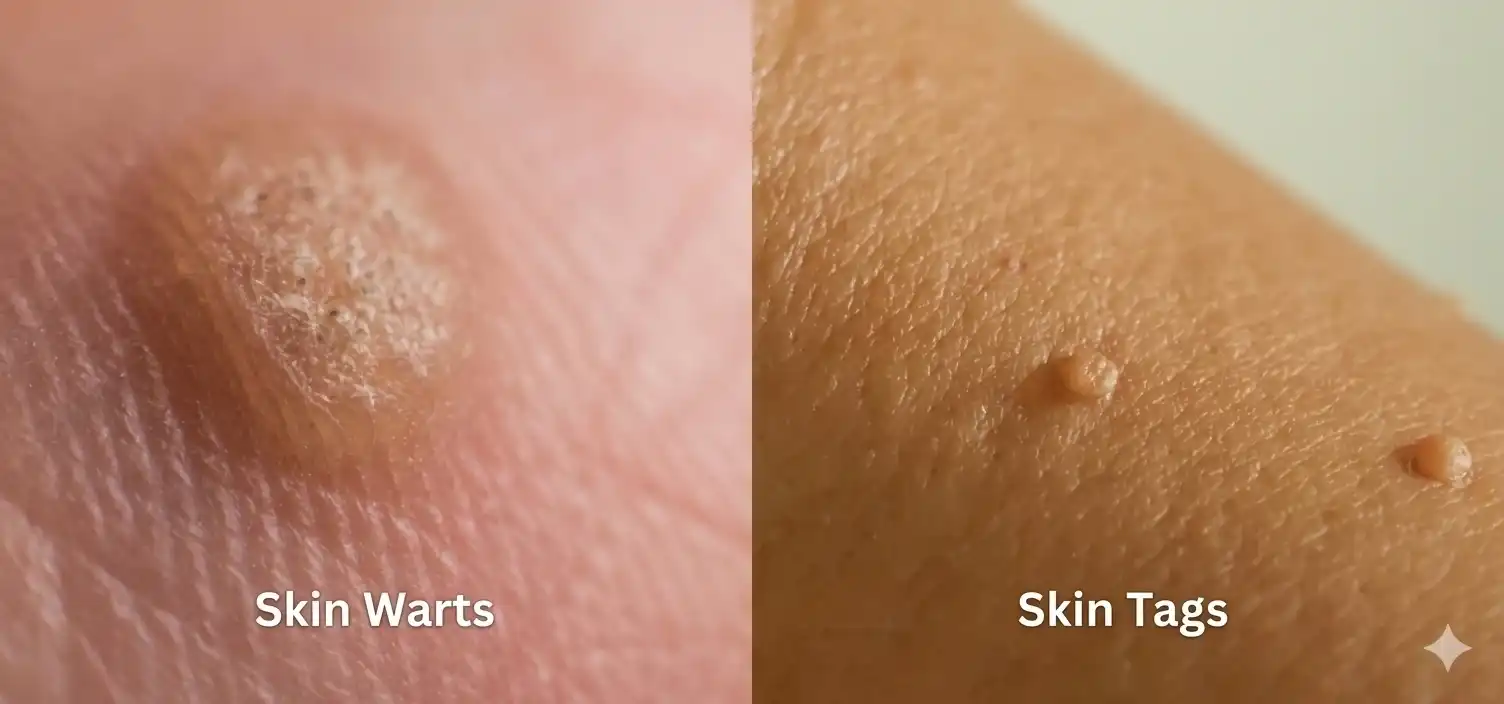
Warts are small, rough, non-cancerous growths on the skin caused by an infection with the human papillomavirus (HPV). There are over 100 strains of HPV, and different strains cause different types of warts in different locations on the body. The virus enters the skin through tiny cuts or breaks and causes the skin cells to multiply rapidly, creating the characteristic raised, rough-textured growth. Warts are contagious — they can spread from person to person through direct skin contact, or from one part of your own body to another. They are more common in children and young adults, and in people with weakened immune systems. However, anyone can develop warts at any age.Types of Warts
1. Common Warts (Verruca Vulgaris)
The most frequently seen type. They appear as rough, dome-shaped growths, usually on the fingers, hands, knuckles, and around the nails. They have a characteristic rough, cauliflower-like surface. They are harmless but can be uncomfortable, especially around the nails.
2. Plantar Warts (Verrucae)
These grow on the soles of the feet, and because of constant body weight pressing down on them, they tend to grow inward rather than outward. Plantar warts can be quite painful, especially when walking or standing. They often have tiny black dots in the center — these are small blood vessels. Many people mistake them for corns or calluses.
3. Flat Warts (Verruca Plana)
Smaller and smoother than common warts, flat warts tend to appear in clusters and are most commonly found on the face, forehead, neck, hands, and legs. They can be especially bothersome when on the face, as shaving can spread them across an area.
4. Filiform Warts
Long, slender, thread-like projections that grow on the face — particularly around the eyes, lips, and nose. They can be cosmetically distressing and may spread if not treated promptly.
5. Periungual Warts
Warts that develop under and around the fingernails and toenails. They can disrupt nail growth, cause nail deformity, and are notoriously difficult to treat because of their location. They can be painful and spread to surrounding skin.
6. Genital Warts
Caused by specific strains of HPV, genital warts appear on the genital and anal areas and are sexually transmitted. They require specific medical treatment and should always be evaluated by a doctor. Unlike other warts, some genital HPV strains carry a risk of cervical or other genital cancers, making diagnosis and treatment particularly important.
What Are Skin Tags?
Skin tags — medically known as acrochordons or fibroepithelial polyps — are small, soft, benign growths that hang off the skin on a thin stalk or peduncle. Unlike warts, skin tags are not caused by a virus. They are simply an overgrowth of normal skin tissue.
Skin tags are entirely harmless. They do not become cancerous. However, they can be annoying, cosmetically bothersome, or uncomfortable when they catch on clothing, jewelry, or skin — and many people choose to have them removed simply for comfort and appearance.
Where Do Skin Tags Appear?
Skin tags tend to develop in areas where skin folds or rubs against itself or clothing: • Neck — especially around the collar area • Armpits • Groin and inner thighs • Under the breasts • Eyelids • Around the face and jawline They are more common in middle-aged and older adults, in people who are overweight or obese (due to more skin friction), in pregnant women (due to hormonal changes), and in people with diabetes or insulin resistance.
Should You Be Worried About Warts or Skin Tags?
In the vast majority of cases, both warts and skin tags are benign and pose no health risk. However, there are situations where you should have a skin growth evaluated by a dermatologist rather than assuming it is a harmless wart or skin tag: • The growth is changing in size, shape rapidly • It bleeds without obvious injury • It appears on the genitals or around the anus • It is painful, itchy, or inflamed without explanation • You are not certain whether it is a wart, skin tag, or something else A qualified dermatologist can examine any skin growth and give you a confident, accurate diagnosis. Never attempt to remove a growth at home before getting it evaluated.
Why Home Remedies Are Unreliable for Warts and Skin Tags
Home remedies for warts — including apple cider vinegar, duct tape, garlic, tea tree oil, and over-the-counter salicylic acid — are widely used. Some may have mild efficacy for very minor common warts, but they have significant limitations: • They work slowly, often taking weeks or months with inconsistent results • They are completely ineffective for plantar warts, periungual warts, and filiform warts • Incorrect application can irritate or damage the surrounding healthy skin • They do not address the viral root of the wart and high recurrence rates are common • Home skin tag removal using thread, scissors, or nail clippers is dangerous — it can cause significant bleeding, infection, and scarring Professional removal is faster, more reliable, and avoids the risks associated with home attempts.
Professional Wart and Skin Tag Removal: Your Options
1. Cryotherapy (Liquid Nitrogen)
Cryotherapy is one of the most common treatments for warts. Liquid nitrogen is applied to the wart, freezing it at extremely low temperatures. This destroys the wart tissue and triggers an immune response that helps clear the HPV virus. The frozen wart gradually separates and falls off over 1 to 2 weeks. Cryotherapy is quick, effective, and suitable for most types of warts. Multiple sessions may be needed for larger or stubborn warts. There is minimal downtime.
2. Electrocauterization (Electrosurgery)
An electric current is used to burn and destroy wart or skin tag tissue precisely. It is fast, effective, and can treat warts and skin tags of various sizes in a single session. The area heals within a week or two. Electrocauterization is particularly effective for skin tags and common warts.
3. Laser Treatment
Laser removal uses focused light energy to precisely destroy wart or skin tag tissue. It is particularly useful for warts in sensitive locations (around the eyes, face, or genitals), for warts that have not responded to other treatments, and for multiple warts in a single session. The laser seals blood vessels simultaneously, minimizing bleeding.
4. Surgical Excision
For larger warts or skin tags, simple surgical removal under local anesthesia is a highly effective option. The growth is cut away, and the area closes cleanly. This provides the fastest and most definitive result.
5. Chemical Treatments (Trichloroacetic Acid / Podophyllin)
Chemical solutions like trichloroacetic acid (TCA) or podophyllin are applied directly to warts to chemically destroy the tissue. These are particularly useful for genital warts and flat warts.
6. Immunotherapy
For recurrent or resistant warts, immunotherapy approaches — such as intralesional injections or topical immune modulators — can stimulate the immune system to recognize and fight the HPV virus more effectively.
What to Expect After Wart or Skin Tag Removal
Recovery after most wart and skin tag removal procedures is straightforward: • Mild redness, swelling, or a small blister at the site is normal for the first few days • The treated area heals within 1 to 3 weeks depending on the method used • A small scab may form and will naturally fall off — do not pick at it • Sun protection over the treated area helps prevent post-treatment hyperpigmentation • Most procedures leave minimal to no scarring when performed by an experienced dermatologist Your dermatologist will provide specific aftercare instructions based on the method used and the location of the removal.
Will Warts Come Back After Removal?
This is a very common question. The honest answer is: warts can recur, because the HPV virus can remain dormant in the skin even after the wart is removed. The recurrence risk varies depending on the type of wart, the treatment method, and your immune system's ability to control the virus. Boosting your immune system through good sleep, nutrition, and stress management helps reduce recurrence. For patients with recurring warts, immunotherapy approaches can be particularly effective in training the immune system to suppress the virus more permanently.
Warts & Skin Tags Removal at Veda Skin & Hair Clinic
If you have a wart, skin tag, or any suspicious skin growth that is bothering you, the safest step is to have a dermatologist evaluate it. At Veda Skin Hair & Aesthetic Center in Kompally, Hyderabad, wart and skin tag removal is one of the most commonly performed procedures. Led by Dr. Radha Penumatsa, MD in Dermatology, Venereology & Leprosy, the clinic offers accurate diagnosis and the most appropriate removal technique for each case - whether that's cryotherapy, electrocauterization, or laser. As a trusted skin care clinic in Kompally, Veda Skin & Hair Clinic combines specialist expertise with a 99% patient satisfaction rate to deliver safe, effective, and comfortable results.
Conclusion
Warts and skin tags are among the most common skin problems people deal with — and also among the easiest to treat professionally. Whether you have had a bothersome skin tag on your neck for years or a plantar wart that makes every step uncomfortable, there is a quick and effective solution waiting for you at a dermatologist's clinic. Do not keep putting it off. Removal is quick, the procedures are simple, and the relief you will feel afterward is immediate and lasting. If you have any skin growth you are unsure about, get it checked by a professional - early assessment is always the right call.
Frequently Asked Questions (FAQs)
1. Is wart removal painful?
Most wart removal procedures involve only mild discomfort. Cryotherapy causes a brief stinging or burning sensation during application. Electrocauterization and laser procedures are performed after applying local anesthetic, so pain during the procedure is minimal. Any mild discomfort afterward typically resolves within a few days.
2. Can skin tags be removed in a single session?
Yes. Most skin tags can be completely removed in a single session through electrocauterization, laser, or surgical excision. The procedure typically takes only a few minutes per tag and healing is quick.
3. Will removing a skin tag cause it to spread?
No. Skin tags are not contagious and are not caused by a virus, so removing one does not cause others to spread. However, new skin tags may develop in other areas over time due to the same predisposing factors — this is unrelated to the removal.
4. How do I know if a growth is a wart, skin tag, or something else?
A dermatologist can accurately diagnose any skin growth with a clinical examination. Warts are rough, firm, and often have a cauliflower-like surface. Skin tags are soft, smooth, and hang off the skin on a stalk. Other growths may look similar but require different treatment — which is exactly why a professional assessment is always recommended before attempting any home treatment.
5. How many sessions are needed to remove warts?
Superficial warts and skin tags are often removed in a single session. Larger, deeper, or stubborn warts — particularly plantar warts and periungual warts — may require 2 to 4 sessions. Your dermatologist will give you a realistic estimate after examining the wart.
6. Is it safe to remove warts at home?
Over-the-counter salicylic acid products can be used for small, simple common warts on the hands and feet — but they are slow, inconsistent, and ineffective for many wart types. Home methods like cutting, burning, or tying skin tags carry a real risk of infection, excessive bleeding, and scarring. For safe, reliable, and lasting results, professional removal by a dermatologist is always the better choice.
7. Can children get warts removed at a dermatology clinic?
Yes, children are commonly treated for warts at dermatology clinics. The treatment is adapted to be as gentle and comfortable as possible for younger patients. Common warts and plantar warts are particularly prevalent in children and adolescents, and early treatment prevents them from spreading.
8. Does health insurance cover wart and skin tag removal in India?
Coverage depends on your specific health insurance policy. Removal for cosmetic reasons alone may not be covered, while removal for medical necessity (such as painful plantar warts) may be. We recommend checking with your insurance provider before your appointment.