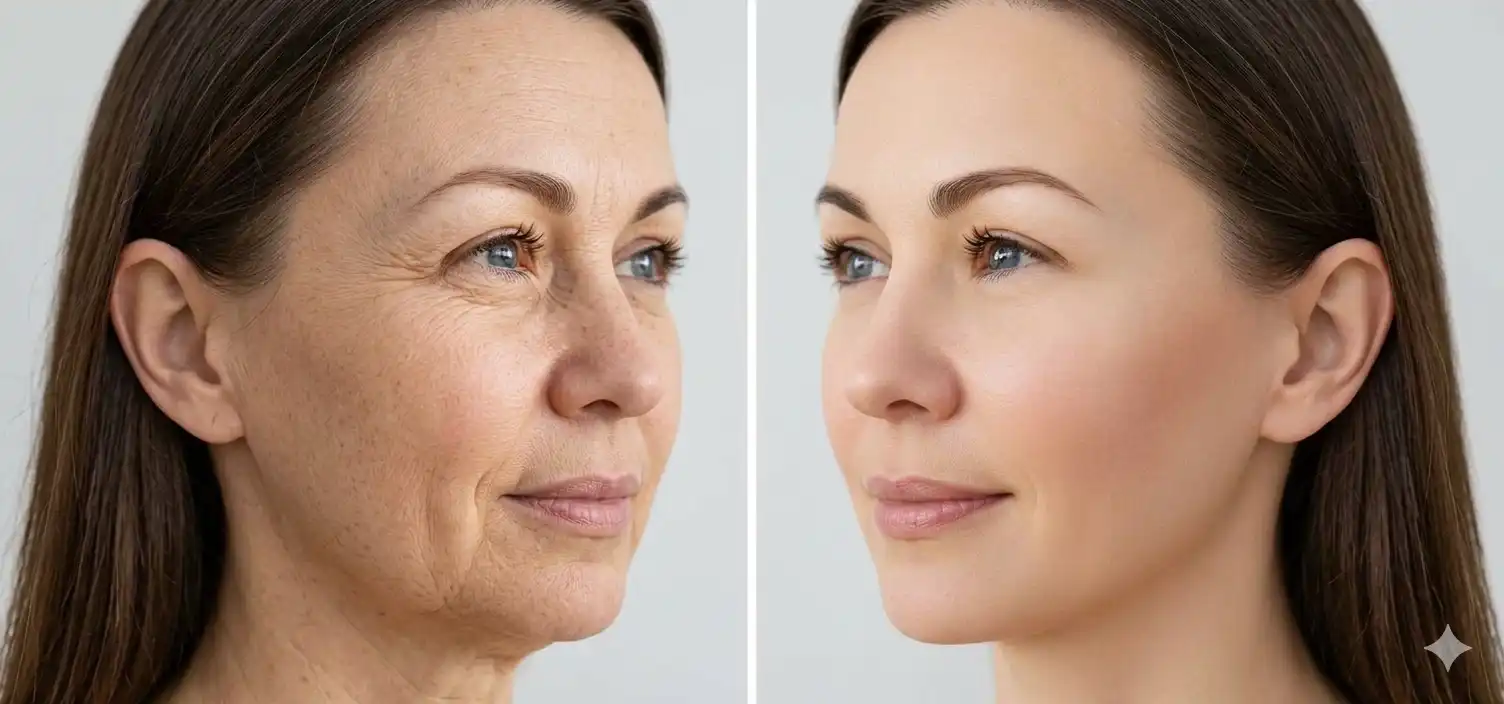
We all age. That's one of life's absolute certainties. But how we age — whether our skin stays resilient and radiant or develops deep wrinkles and visible sagging — is something we have more control over than most people realize.
Today's dermatology offers a remarkable range of anti-aging treatments that go far beyond any cream or serum. Whether you're starting to notice early fine lines in your 30s, dealing with moderate wrinkles in your 40s, or looking for comprehensive rejuvenation in your 50s and beyond, there's a treatment plan designed for where you are right now.
This blog covers everything you need to know about anti-aging treatments — from understanding why skin ages the way it does, to the most effective clinical options available today, and how to choose the right approach for your skin.
Why Does Skin Age?
Understanding why your skin ages helps you make better decisions about treatment. Skin aging happens due to two processes working together:
1. Intrinsic (Internal) Aging
This is the natural, biological aging process driven by your genetics. Over time, your skin produces less collagen and elastin — the proteins that keep skin firm and bouncy. Cell turnover slows down, meaning dead skin cells take longer to shed. Hyaluronic acid levels (which keep skin plump and hydrated) decline. The result: skin becomes thinner, drier, and less elastic.
2. Extrinsic (External) Aging
This is aging caused by outside factors — and this is the part you can most actively control. The biggest contributor is UV radiation from the sun (photoaging), which breaks down collagen, causes pigmentation, and accelerates wrinkle formation. Other factors include pollution, smoking, poor nutrition, chronic stress, dehydration, and inadequate sleep.
Most of the visible aging that concerns people — wrinkles, dark spots, sagging, rough texture — is heavily influenced by extrinsic factors. This means that with the right treatment and prevention, a significant amount of visible aging can be slowed down or reversed.
Common Signs of Skin Aging
- Fine lines around the eyes (crow's feet) and mouth
- Deep wrinkles on the forehead and between the brows
- Sagging skin on the cheeks, jawline, and neck
- Loss of facial volume and hollowing under the eyes
- Age spots and uneven skin tone
- Rough, dull skin texture
- Open pores and skin laxity
- Thin, fragile skin that bruises or marks easily
Anti-Aging Treatments: A Complete Overview
Modern dermatology offers both non-invasive and minimally invasive options. Here are the most effective anti-aging treatments available at leading clinics today:
1. Botox (Botulinum Toxin Injections)
Botox is one of the world's most popular and well-researched anti-aging treatments. It works by temporarily relaxing the muscles that cause dynamic wrinkles — those lines that appear when you frown, smile, squint, or raise your eyebrows.
Botox is highly effective for forehead lines, frown lines between the brows (the '11s'), and crow's feet around the eyes. Results typically last 3 to 6 months. It is a quick procedure with virtually no downtime, and when done by an experienced doctor, it looks completely natural — not frozen.
2. Dermal Fillers
As we age, we lose volume in our face — hollowed cheeks, thin lips, sunken under-eyes. Dermal fillers (usually hyaluronic acid-based) restore this lost volume and fill in deep creases that Botox alone cannot address. They can be used for nasolabial folds (smile lines), marionette lines, under-eye hollows, cheek augmentation, and lip enhancement.
Results are immediate and last between 12 to 18 months depending on the filler used and the area treated.
3. Skin Tightening Treatments (HIFU, Radiofrequency)
High-Intensity Focused Ultrasound (HIFU) and radiofrequency-based treatments work by delivering controlled energy deep into the skin's layers, stimulating collagen production and causing immediate tissue tightening. These treatments address skin laxity on the face, neck, jawline, and even the body.
They are non-surgical, require no downtime, and produce gradual but very natural-looking improvement over 2 to 3 months as new collagen forms.
4. Chemical Peels for Anti-Aging
Medium to deep chemical peels resurface the skin, removing damaged outer layers and stimulating collagen renewal. They are particularly effective for improving skin tone, treating sun damage, and reducing fine lines and wrinkles. TCA peels are a go-to choice for anti-aging results with chemical exfoliation.
5. Microneedling / Collagen Induction Therapy
Microneedling uses fine needles to create controlled micro-injuries in the skin, triggering the body's natural healing response and collagen production. It improves skin texture, reduces fine lines, tightens pores, and restores overall skin quality. When combined with PRP (platelet-rich plasma), the results are even more impressive.
6. PRP (Platelet-Rich Plasma) Therapy for Skin
PRP involves drawing a small amount of the patient's own blood, processing it to concentrate the growth factors, and injecting or applying it to the skin. The growth factors stimulate collagen synthesis, improve skin quality, and give a natural glow. PRP is a powerful complement to other anti-aging treatments.
7. Laser Skin Rejuvenation
Laser treatments target sun damage, pigmentation, uneven tone, and mild to moderate wrinkles. Fractional lasers create controlled micro-damage in columns, stimulating new collagen formation while leaving surrounding tissue intact. The result is smoother, firmer, and more even-toned skin with relatively minimal downtime.
8. Thread Lift
Thread lift is a minimally invasive procedure that uses biodegradable suture threads inserted under the skin to physically lift sagging cheeks, jowls, and neck. It also stimulates collagen production around the threads. It offers a non-surgical lifting effect that can last 18 to 24 months.
9. Anti-Aging Skincare Prescription
A good dermatologist will also prescribe medical-grade skincare to complement in-clinic treatments. Prescription retinoids (vitamin A derivatives), vitamin C serums, niacinamide, peptides, and daily SPF form the backbone of a long-term anti-aging skincare routine.
Which Anti-Aging Treatment Is Right for You?
There is no single 'best' anti-aging treatment — the right approach depends on your age, skin condition, specific concerns, and how much downtime you can afford. A thorough consultation with a qualified dermatologist is the only way to get a properly personalized treatment plan.
As a general guide:
- Early 30s: Focus on prevention — sunscreen, antioxidants, mild chemical peels, and collagen-stimulating treatments
- Late 30s to 40s: Add Botox for dynamic wrinkles, microneedling for texture, and PRP for overall rejuvenation
- 50s and beyond: Combine fillers for volume restoration, Botox, skin tightening treatments, and possibly a thread lift for sagging
Anti-Aging Myths — Debunked
Myth 1: Anti-aging treatments make you look unnatural — This only happens when treatments are overdone or performed by inexperienced practitioners. A skilled dermatologist always aims for natural-looking enhancement — refreshed, not altered.
Myth 2: You should wait until you're older to start anti-aging treatments — Prevention is far easier than correction. Starting with mild treatments and good skincare in your late 20s or early 30s significantly slows visible aging. Waiting until wrinkles are deep makes them harder to treat.
Myth 3: Expensive creams can replace clinical treatments — No over-the-counter cream can replicate what Botox, fillers, lasers, or collagen-stimulating procedures do. Skincare supports and maintains, but clinical treatments produce the structural changes that creams simply cannot.
Anti-Aging Treatments at Veda Skin & Hair Clinic
If you are looking for anti-aging treatment in Hyderabad or a trusted dermatologist in Kompally who offers the latest aesthetic solutions, Veda Skin Hair & Aesthetic Center in Kompally is the right place. Dr. Radha Penumatsa, MD in Dermatology, Venereology & Leprosy, believes that anti-aging treatment should enhance your natural beauty — helping you look like the best, most rested version of yourself. As a top skin care clinic in Kompally, every anti-aging consultation at Veda begins with a thorough skin assessment, evaluating your unique concerns — whether that is wrinkles, volume loss, pigmentation, or sagging — and designing a treatment plan that is realistic, safe, and tailored specifically to you. The clinic offers a full range of anti-aging treatments including Botox, fillers, chemical peels, PRP therapy, skin rejuvenation, and thread lifts - all performed with advanced techniques and the highest standards of care.
Conclusion
Aging gracefully doesn't mean you have to just watch it happen. Today's anti-aging treatments are safe, effective, and incredibly nuanced — designed to refresh your appearance while keeping you looking like yourself, just at your very best.
Whether you are concerned about early fine lines, deep wrinkles, sagging skin, or loss of facial volume, there is a treatment that can make a real difference. The first step is a honest conversation with a qualified dermatologist.
Frequently Asked Questions (FAQs)
Q1. At what age should I start anti-aging treatments?
There's no fixed age, but prevention is easier than correction. Most dermatologists recommend starting with good sun protection and mild treatments like chemical peels or antioxidant serums in your late 20s to early 30s. More advanced treatments like Botox and fillers are typically introduced in the 30s and 40s.
Q2. Are anti-aging treatments safe for Indian skin?
Yes, when performed by a qualified dermatologist, anti-aging treatments are safe for all skin tones including Indian skin. The doctor will customize the treatment approach to suit your skin type and minimize any risk of complications.
Q3. How long do results from anti-aging treatments last?
It depends on the treatment. Botox typically lasts 3 to 6 months. Fillers last 12 to 18 months. Skin tightening and laser treatments produce gradual improvements that can last 1 to 2 years. Maintenance sessions help sustain results over the long term.
Q4. Is Botox painful?
Botox involves small injections with very fine needles. Most patients describe it as a mild pinch. Numbing cream can be applied beforehand to make the experience as comfortable as possible.
Q5. Can I combine multiple anti-aging treatments?
Yes, combining treatments often produces the best results. For example, Botox addresses dynamic wrinkles, fillers restore volume, and PRP improves overall skin quality. Your dermatologist will guide you on safe, effective combinations based on your skin.
Q6. Do anti-aging treatments have side effects?
Most anti-aging treatments have minimal, temporary side effects such as mild redness, swelling, or bruising that resolve within a few days. Serious complications are rare when procedures are performed by experienced, qualified doctors.
Q7. Can men get anti-aging treatments?
Absolutely. Anti-aging treatments are equally effective and popular among men. Many men seek treatment for forehead lines, crow's feet, and skin rejuvenation. The approach is tailored to suit masculine facial features and aesthetics.