
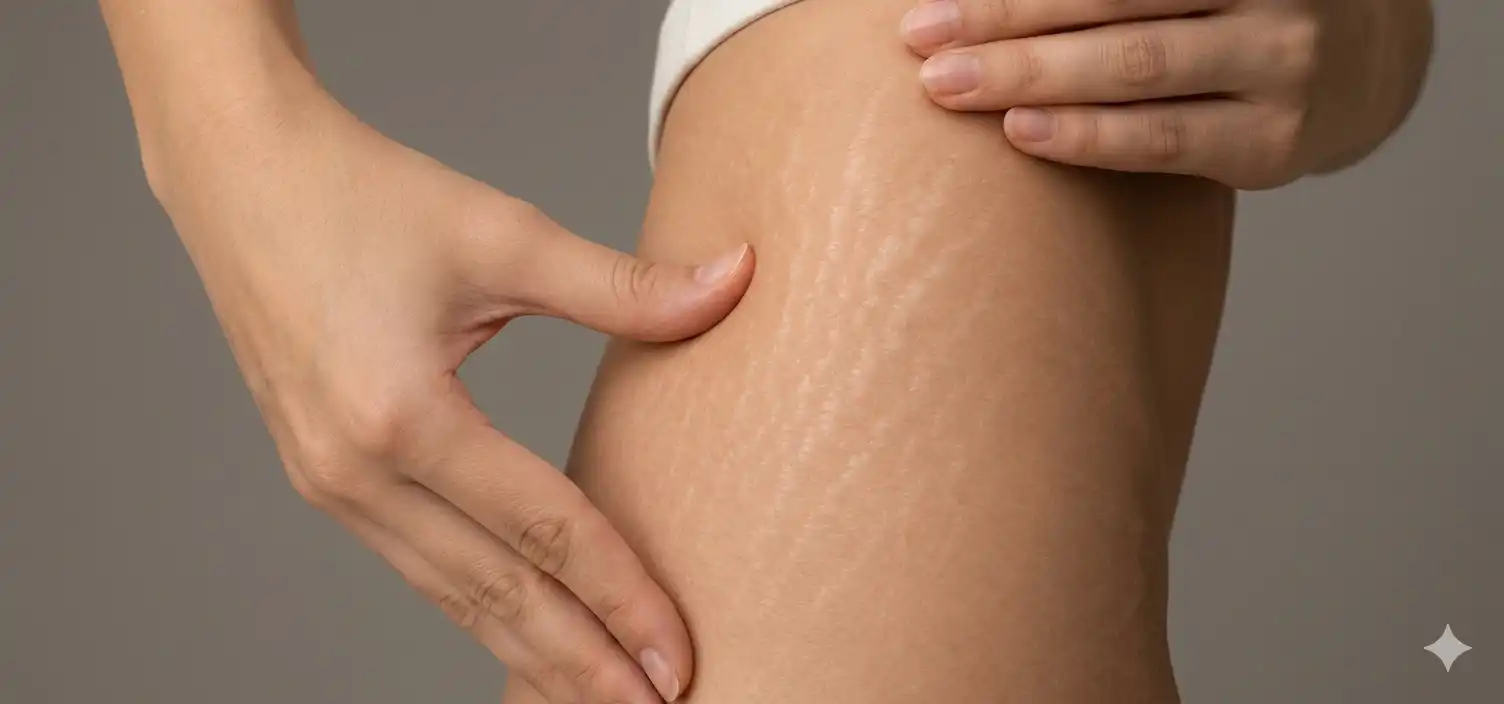
Stretch marks are one of the most common skin concerns in the world — and yet they remain one of the most misunderstood and undertreated. Many people spend years applying creams and oils hoping the marks will disappear, often with minimal results. Others simply accept them as permanent, believing nothing can really help.
The truth sits somewhere in the middle. Stretch marks can be significantly reduced. They are unlikely to vanish completely with any treatment, but modern dermatological techniques can make them considerably less visible — giving you skin that feels and looks far more even and confident.
In this blog, we explain what stretch marks actually are, what causes them, and which treatments deliver the most meaningful improvement.
What Are Stretch Marks?
Stretch marks — medically called striae distensae — are a type of scar that forms in the dermis, the middle layer of the skin, when the skin is stretched faster than it can accommodate. When the skin stretches too rapidly, the collagen and elastin fibres that give it structure and elasticity can rupture, leaving behind linear marks or streaks.
Initially, stretch marks appear red, pink, or purple — this is called striae rubrae. During this active phase, the blood vessels beneath the stretched skin are visible. Over time, they fade to white or silver — called striae albae — as the blood vessels contract and the marks become more fibrous and scar-like.
Stretch marks most commonly appear on the abdomen, breasts, hips, thighs, buttocks, upper arms, and lower back. They can develop on anyone, regardless of age or body type.
What Causes Stretch Marks?
Stretch marks form whenever the skin is put under significant rapid stress. The most common causes include:
- Pregnancy — The most well-known cause. The abdomen, breasts, and thighs expand rapidly during pregnancy, stretching the skin beyond its natural capacity. Hormonal changes during pregnancy also affect collagen production, making the skin more vulnerable to tearing. Up to 90% of pregnant women develop stretch marks.
- Rapid Weight Gain or Weight Loss — Significant weight changes in a short period of time stretch or contract the skin faster than it can adapt. Both weight gain and rapid weight loss after bariatric surgery can lead to stretch marks.
- Growth Spurts During Adolescence — Teenagers often develop stretch marks during growth spurts, particularly on the thighs, hips, back, and shoulders. Boys commonly develop them on the back and shoulders; girls more often on the breasts, hips, and thighs.
- Bodybuilding and Rapid Muscle Growth — When muscles grow very rapidly through intense training, the overlying skin can stretch faster than it can accommodate, leading to stretch marks on the arms, shoulders, chest, and thighs.
- Genetics — If your mother or close family members developed stretch marks easily, you are more likely to as well. Genetic factors influence skin elasticity and collagen quality — both of which determine how easily your skin develops stretch marks.
- Corticosteroid Use — Prolonged use of corticosteroid creams or medications can thin the skin and reduce its elasticity, making stretch marks more likely to develop.
- Medical Conditions — Certain conditions like Cushing's syndrome, Marfan syndrome, and adrenal gland disorders can cause stretch marks as a secondary effect.
New (Red/Pink) vs. Old (White/Silver) Stretch Marks — Does It Matter for Treatment?
Yes, significantly. The stage of your stretch marks matters a great deal for treatment outcomes.
New stretch marks (striae rubrae) are actively forming. The blood vessels beneath are still present, which makes this phase the most responsive to treatment. Intervening early — while the marks are still red or pink — gives the best chance of significantly reducing their appearance.
Old stretch marks (striae albae) are mature scars. The collagen has already reorganized into scar tissue . They are harder to treat but can still be substantially improved with the right approach. Even old, white stretch marks can be noticeably faded and textured improved with advanced clinical treatments.
Why Creams and Oils Alone Don't Fully Work
Cocoa butter, shea butter, vitamin E oil, and stretch mark creams are widely used — and widely disappointing when used alone. Here's why:
Stretch marks form in the dermis — the deeper layer of skin. Most topical creams and oils can only reach the epidermis, the outermost layer. They cannot penetrate deeply enough to repair the broken collagen fibres in the dermis where the marks actually live.
This doesn't mean topical products have no role. Keeping skin well-moisturized during pregnancy and periods of rapid growth does improve its elasticity and may reduce the severity of stretch marks that form. But once stretch marks have formed, topical products alone are rarely sufficient for significant improvement.
Clinical Treatments for Stretch Marks That Actually Work
Dermatologists have several evidence-based treatments that penetrate deeply enough to stimulate collagen remodeling and genuinely improve the appearance of stretch marks:
1. Microneedling (Collagen Induction Therapy)
Microneedling is one of the most effective treatments for stretch marks. Fine needles create thousands of controlled micro-injuries in the skin, triggering the body's natural healing response and stimulating new collagen and elastin production. Over a series of sessions, the skin gradually remodels — improving texture, reducing the indented appearance, and fading the color of stretch marks.
Microneedling works well for both new and old stretch marks and is safe for all skin types including darker Indian skin tones.
2. Laser Treatment
Several types of lasers can target stretch marks effectively. Fractional lasers (like fractional CO2 or Erbium) create microscopic treatment columns in the skin, stimulating intense collagen remodeling while leaving surrounding tissue intact. This accelerates skin renewal and significantly improves stretch mark texture and color.
Pulsed dye lasers (PDL) are particularly effective for new, red stretch marks as they target the blood vessels, reducing redness and helping the marks fade faster. Laser treatment is one of the most powerful options and is often recommended as a first-line clinical treatment.
3. Radiofrequency (RF) Microneedling
RF microneedling combines the collagen-stimulating effect of microneedling with the heat energy of radiofrequency. The radiofrequency energy is delivered precisely into the dermis through the needles, causing both collagen contraction and new collagen formation. It produces excellent results for stretch mark texture and firmness with minimal downtime.
4. Chemical Peels
Medium-depth chemical peels can improve the texture and color of stretch marks, particularly newer ones. They work by exfoliating damaged skin layers and accelerating cell turnover, encouraging the formation of healthier skin tissue.
5. PRP (Platelet-Rich Plasma) Therapy
PRP injected into stretch marks delivers a high concentration of growth factors directly to the area, stimulating collagen synthesis and skin regeneration. When combined with microneedling (PRP microneedling), the results are enhanced — the micro-channels created by the needles allow the PRP growth factors to penetrate deeply for maximum effect.
6. Topical Prescription Treatments
Prescription retinoids (tretinoin) can stimulate collagen production and improve the texture of stretch marks, particularly when started early. They are most effective for newer stretch marks and are used as a complement to in-clinic procedures.
How Many Sessions Are Needed?
Most stretch mark treatments require multiple sessions for best results:
- Microneedling: Typically 4 to 6 sessions, spaced 4 weeks apart
- Laser treatment: 3 to 6 sessions depending on the type and severity
- RF microneedling: 3 to 5 sessions, spaced 4 to 6 weeks apart
- PRP therapy: 3 to 4 sessions as a standalone or combined with microneedling
Results improve progressively over the treatment course and continue to improve for several months afterward as new collagen matures. Your dermatologist will recommend the most appropriate protocol based on the age, severity, and location of your stretch marks.
Can Stretch Marks Be Prevented?
Complete prevention is not always possible — genetics play a significant role. However, certain measures can reduce the severity of stretch marks that develop:
- Keep skin well-moisturized during pregnancy and periods of rapid growth or weight change
- Maintain slow, steady weight gain during pregnancy as recommended by your doctor
- Stay adequately hydrated — well-hydrated skin is more elastic
- Eat a skin-nourishing diet rich in vitamins C, E, zinc, and protein
- Begin using prescription retinoids or specific topical treatments early if you are at high risk — discuss with your dermatologist
Stretch Marks Treatment at Veda Skin & Hair Clinic
Whether your stretch marks are from pregnancy, weight changes, or growth spurts - whether they are new and red or old and white - effective treatment is available at Veda Skin Hair & Aesthetic Center in Kompally, Hyderabad. Dr. Radha Penumatsa, MD in Dermatology, Venereology & Leprosy, is an experienced dermatologist in Kompally who understands how stretch marks affect not just the skin but also a person's confidence and body image. As a leading skin care clinic in Kompally, Veda Skin & Hair Clinic offers the full range of stretch mark treatments - from microneedling and laser therapy to PRP and RF microneedling - all performed with precision and care. With 25,000+ patients treated and a 99% satisfaction rate, Dr. Radha and the team at Veda are here to help you feel more comfortable and confident in your own skin.
Conclusion
Stretch marks are remarkably common — affecting people of all ages, genders, and body types. They are a natural response of skin under stress. But common does not have to mean permanent, and you do not have to simply accept how they look if they bother you.
Modern dermatological treatments have made it possible to significantly fade and improve stretch marks in ways that were simply not available a decade ago. Whether you are a new mother, someone who has gone through significant weight changes, or a young adult dealing with growth-related stretch marks, there is a treatment plan that can help.
Frequently Asked Questions (FAQs)
Q1. Can stretch marks be completely removed?
Complete removal is not possible with any current treatment. However, stretch marks can be significantly faded, their texture improved, and their visibility greatly reduced with the right clinical treatments. Many patients achieve 50 to 80% improvement, making the marks far less noticeable. Early treatment gives the best results.
Q2. Which treatment is best for old white stretch marks?
Old, white stretch marks are more challenging than new ones, but they can still be meaningfully improved. Fractional laser treatment and RF microneedling are among the most effective options for mature stretch marks. Multiple sessions are usually needed. A dermatologist will assess your marks and recommend the most appropriate protocol.
Q3. Is stretch mark treatment safe during breastfeeding?
Some treatments are not recommended during breastfeeding. Laser treatments and certain topical prescription agents may need to be avoided. However, microneedling and some gentle treatments may be appropriate. Always consult your dermatologist and inform them that you are breastfeeding before starting any treatment.
Q4. Is microneedling for stretch marks painful?
A topical numbing cream is applied before microneedling to minimize discomfort. Most patients describe the procedure as mildly uncomfortable — a sensation of warmth and pressure. The treatment is generally well-tolerated with proper numbing.
Q5. How long does it take to see results from stretch mark treatment?
Initial improvement can be seen after 2 to 3 sessions. Collagen remodeling continues for 3 to 6 months after each session, meaning results keep improving progressively. Final results are typically visible 3 to 6 months after completing the recommended course of treatment.
Q6. Are stretch mark treatments safe for Indian skin?
Yes, when performed by an experienced dermatologist who understands pigmented skin. Indian skin requires careful selection of laser types and settings to avoid post-inflammatory hyperpigmentation. At Veda Skin & Hair Clinic, Dr. Radha customizes treatment protocols specifically for Indian skin tones to ensure safety and effectiveness.
Q7. Can men get stretch mark treatment?
Absolutely. Stretch marks are common in men too — particularly on the back, shoulders, and arms from growth spurts or bodybuilding. All the treatments available for women are equally effective for men. There is no gender-specific limitation on stretch mark treatment.