
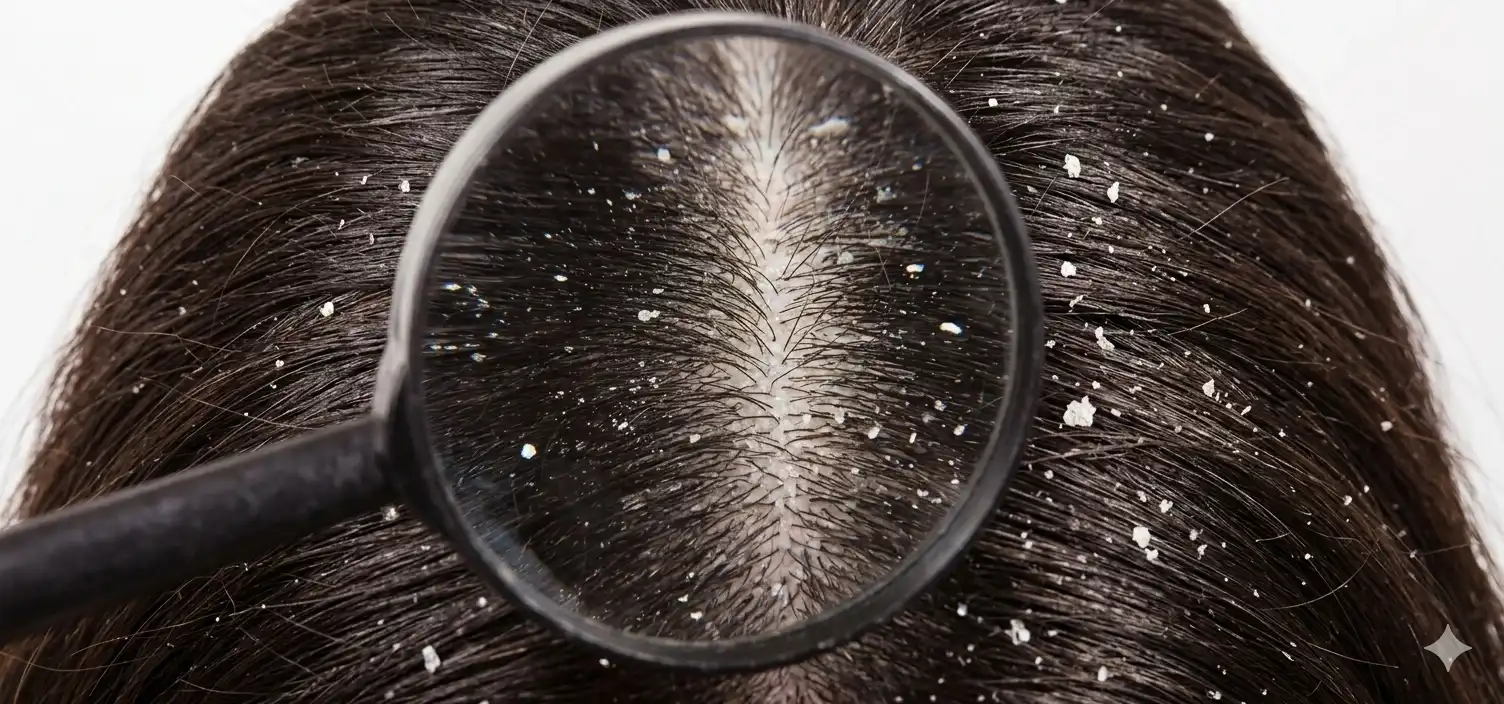
It often starts quietly — a little itch here, a few white flakes on your collar there. You switch shampoos, try a home remedy, and for a while it seems to get better. Then it comes back, sometimes worse than before. If this sounds familiar, you are not alone.
Dandruff is one of the most common scalp conditions in the world, affecting roughly 50% of people at some point in their lives. But here is the thing — what most people call dandruff is often a misunderstood and under-treated condition. Dandruff is not just about hygiene, and it is not something you simply have to live with.
In this blog, we break down everything you need to know about dandruff and scalp conditions — what really causes them, how to tell if your scalp issue goes beyond ordinary dandruff, and what professional scalp treatments can do when shampoos alone are not enough.
What Is Dandruff? Understanding the Basics
Dandruff is a chronic condition of the scalp characterized by flaking of the skin and, in most cases, an itchy scalp. The flakes can be white and powdery or yellowish and oily depending on the underlying cause.
The scalp naturally sheds skin cells as part of the normal cell renewal cycle. In dandruff, this process accelerates abnormally — skin cells multiply and shed far too quickly, producing visible flakes on the scalp and hair.
Dandruff is not contagious. It cannot be spread from person to person. It is also not caused by poor hygiene, though infrequent washing can make the flaking more visible. Understanding these facts is important, because there is still a lot of stigma and misinformation around this very common condition.
What Actually Causes Dandruff?
There are several possible causes, and identifying the right one is what leads to the right treatment:
1. Malassezia — Fungal Overgrowth
The most common cause of dandruff is a naturally occurring yeast-like fungus called Malassezia globosa. This organism lives on everyone's scalp, but in some people it grows in excess, irritating the scalp and triggering accelerated skin cell turnover — leading to flaking. This type of dandruff responds well to antifungal treatments .
2. Seborrheic Dermatitis
Seborrheic dermatitis is a more intense form of dandruff. It causes yellowish, greasy flakes along with redness and significant itching. It can affect not just the scalp but also the eyebrows, sides of the nose, and behind the ears. It is a chronic condition that flares and subsides but rarely resolves completely without proper treatment.
3. Dry Scalp
A dry scalp produces smaller, whiter flakes without much oiliness. It is more common in winter or in people who use harsh shampoos or over-wash their hair. The flakes fall off easily and the scalp is not inflamed, which distinguishes it from seborrheic dermatitis.
4. Scalp Psoriasis
Scalp psoriasis is an autoimmune condition that causes red, scaly, thick patches on the scalp. The scales are typically silvery-white and can extend beyond the hairline. It can be confused with severe dandruff but requires different and more targeted treatment. A dermatologist's diagnosis is essential here.
5. Contact Dermatitis
Sensitivity or allergic reactions to hair products — shampoos, conditioners, hair dyes, or styling products — can inflame the scalp and cause flaking, redness, and intense itching. This is known as contact dermatitis and usually resolves once the triggering product is identified and removed.
6. Stress, Hormonal Changes and Diet
Chronic stress, hormonal imbalances, and nutritional deficiencies — particularly zinc, B vitamins, and omega-3 fatty acids — can trigger or worsen dandruff. Many people notice flare-ups during particularly stressful phases of their lives.
Dandruff vs. Other Scalp Conditions — Know the Difference
Not every flaky scalp is simple dandruff. Here is a quick guide:
- Ordinary dandruff: White or grey flakes, mild itching, no scalp redness, improves with anti-dandruff shampoo
- Seborrheic dermatitis: Yellowish greasy flakes, significant redness and itching, can affect the face too
- Scalp psoriasis: Thick silver-white scales on red patches, extends to hairline, often associated with psoriasis elsewhere
- Scalp ringworm: More common in children, causes circular bald patches with broken hairs and scaly skin
- Dry scalp: Small white flakes, scalp feels tight, no inflammation, worsens in cold or dry weather
If over-the-counter shampoos have not helped, or you are unsure which condition you have, a dermatologist's assessment is the most reliable path to an answer.
Does Dandruff Cause Hair Loss?
This is one of the most common questions dermatologists hear. The answer is — not directly, but there is a real connection.
Severe dandruff and seborrheic dermatitis cause chronic scalp inflammation. This inflammation disrupts the hair follicle environment, weakens hair roots, and can accelerate shedding. Persistent scratching of an itchy scalp also damages follicles and leads to breakage.
Additionally, the fungal overgrowth and excess sebum associated with dandruff can block hair follicles, impairing healthy hair growth over time. Treating the scalp condition early protects your hair health in the long run.
When Should You See a Dermatologist for Your Scalp?
Anti-dandruff shampoos work well for mild, ordinary dandruff. But you should see a dermatologist when:
- Dandruff persists or worsens despite using anti-dandruff shampoos for 4 to 6 weeks
- Your scalp is red, inflamed, or has thick, scaly patches
- You are experiencing significant or increasing hair loss alongside the dandruff
- The itching is severe and disrupting your sleep or daily life
- Flaking is extending to your face, eyebrows, or behind the ears
- You suspect scalp psoriasis or another skin condition
Professional Scalp Treatments That Actually Work
Prescription Medicated Shampoos
Dermatologists prescribe shampoos with higher concentrations of ketoconazole, zinc pyrithione, ciclopirox, or selenium sulfide than over-the-counter options. These target fungal overgrowth and scalp inflammation far more powerfully.
Topical Corticosteroids
For inflamed scalp conditions like seborrheic dermatitis and scalp psoriasis, topical steroids in lotion, foam, or solution form reduce inflammation and itching quickly. They are used for short periods under medical supervision.
Topical Calcineurin Inhibitors
Tacrolimus and pimecrolimus are non-steroidal anti-inflammatory treatments that work well for seborrheic dermatitis, especially for long-term management where prolonged steroid use is not ideal.
Scalp Detox and Exfoliation Treatments
Professional scalp exfoliation treatments remove built-up dead skin, excess sebum, and product residue from the scalp. This creates a healthier environment for hair follicles and improves the effectiveness of medicated treatments.
Scalp PRP (Platelet-Rich Plasma) Therapy
For patients experiencing hair thinning alongside scalp conditions, scalp PRP is an excellent treatment. It reduces inflammation, nourishes follicles, and stimulates healthier hair growth — making it particularly beneficial when dandruff-related inflammation has contributed to hair loss.
Phototherapy — UVB Light Therapy
For scalp psoriasis that does not respond to topical treatments, targeted UVB phototherapy can significantly reduce the scaly patches and scalp inflammation.
Lifestyle and Dietary Guidance
A dermatologist will also address dietary factors — recommending adequate zinc, vitamin D, B vitamins, and omega-3 fatty acids — as well as stress management strategies and a haircare routine tailored to your specific scalp type.
Scalp Treatment at Veda Skin & Hair Clinic
If you have been struggling with dandruff, an itchy scalp, or scalp-related hair loss and home remedies just are not cutting it anymore, it is time to see a specialist. At Veda Skin Hair & Aesthetic Center in Kompally, Hyderabad, scalp health is taken as seriously as skin health. Dr. Radha Penumatsa, MD in Dermatology, Venereology & Leprosy, is one of the most trusted dermatologists in Kompally who diagnoses and treats the full spectrum of scalp conditions — from common dandruff and seborrheic dermatitis to scalp psoriasis and trichology concerns — with a thorough, evidence-based approach. As a leading skin care clinic in Kompally, Veda Skin & Hair Clinic offers professional scalp analysis, prescription-grade treatments, scalp PRP therapy, and personalized haircare guidance.
Conclusion
Dandruff and scalp conditions are far more complex than most people realize — and far more treatable than most people expect. Whether you have been dealing with mild flaking or a persistently inflamed, itchy scalp for years, professional treatment can bring real, lasting relief.
Don't let a treatable scalp condition affect your hair health, your confidence, or your quality of life. The right diagnosis and the right treatment plan can make all the difference.
Frequently Asked Questions (FAQs)
Q1. Can dandruff be permanently cured?
Dandruff, especially when caused by seborrheic dermatitis or scalp psoriasis, tends to be a chronic condition. While it may not be permanently eliminated in every case, it can be very effectively controlled with the right treatment. Many patients achieve long periods of remission and live completely comfortably with proper management.
Q2. Is dandruff caused by not washing hair enough?
Not washing frequently enough can make dandruff more visible, but it is not the root cause. Dandruff is most commonly caused by fungal overgrowth and the scalp's abnormal response to it. Even people who wash their hair daily can have dandruff.
Q3. Why does my dandruff keep coming back after treatment?
Dandruff returns because the underlying cause is often chronic. Over-the-counter shampoos manage symptoms temporarily. A dermatologist can prescribe treatments that address the root cause and help you maintain a healthier scalp for longer periods between flare-ups.
Q4. Can dandruff cause permanent hair loss?
Dandruff itself does not cause permanent hair loss. However, the chronic scalp inflammation that accompanies severe dandruff or seborrheic dermatitis can weaken hair follicles and increase shedding over time. Treating the condition early prevents it from escalating.
Q5. Are there foods that worsen dandruff?
Yes. Diets high in sugar, refined carbohydrates, and processed foods can promote fungal growth and worsen scalp inflammation. Foods rich in zinc, omega-3 fatty acids, probiotics, and B vitamins support scalp health. Your dermatologist can provide tailored dietary guidance alongside medical treatment.
Q6. Is it safe to oil my hair if I have dandruff?
This is a very common question in India. While oiling is a traditional practice, applying heavy oil directly to an oily, dandruff-prone scalp can feed the Malassezia fungus and worsen the condition. Light oiling on the hair lengths is generally fine, but consult your dermatologist about what is appropriate for your specific scalp type.
Q7. How is scalp psoriasis different from severe dandruff?
Scalp psoriasis produces thick, adherent silver-white scales on red, raised patches. It often extends beyond the hairline onto the forehead or neck. It is an autoimmune condition requiring different treatment from dandruff. A dermatologist can confirm the diagnosis with an examination and occasionally a skin biopsy.