
SEP 29, 2026
BY ADMIN
Hair Transplant in Kompally: Everything You Need to Know Before You Decide
Losing hair is not just a cosmetic issue. For many people, it affects confidence, the way they present themselves at work, and even how they feel in social situations. If you have tried oils, shampoos and supplements without visible improvement, a hair transplant may be the next step to consider.
In this guide, we explain how a hair transplant works, the techniques used, who can benefit from it, and what to expect before and after the procedure, so you can make an informed decision.
What Is a Hair Transplant?
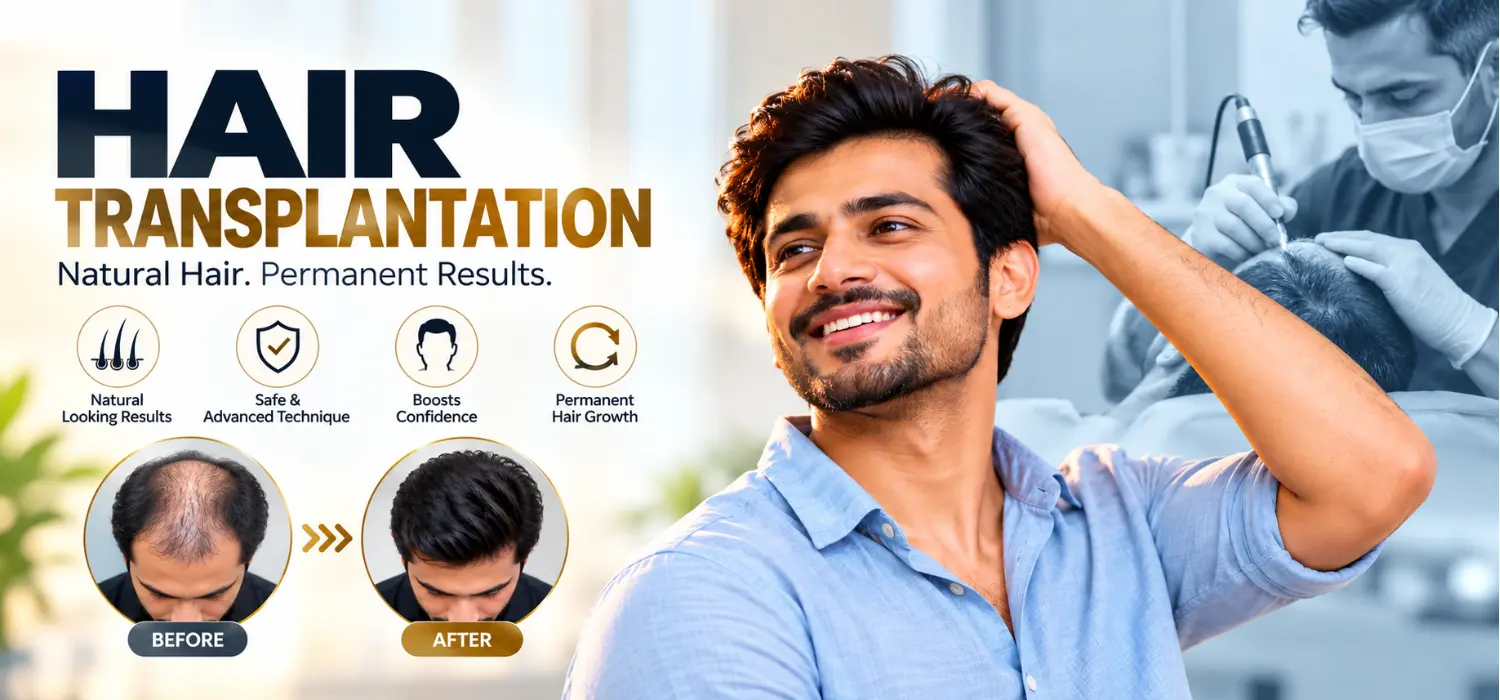
A hair transplant is a surgical procedure in which healthy hair follicles are taken from one part of the scalp, called the donor area, and implanted into areas where hair has thinned or been lost, called the recipient area. Because the transplanted hair is your own, the results look natural.
The donor area is usually the back or sides of the head. Hair in these regions is genetically resistant to the hormone DHT (dihydrotestosterone), which is the main cause of pattern baldness. Because of this, transplanted hair typically continues to grow for many years, often for life.
It is important to understand that a hair transplant does not create new hair. It relocates your existing hair to where you need it most.
Common Causes of Hair Loss
Before deciding on a transplant, it helps to know why the hair loss is happening. The most common causes include:
- Androgenetic alopecia (pattern baldness): The most common cause in both men and women, driven by genetics and hormones.
- Stress and lifestyle factors: Poor sleep, crash diets and long-term stress can trigger shedding.
- Nutritional deficiencies: Low iron, vitamin D, B12 or protein intake can weaken hair.
- Medical conditions: Thyroid disorders, PCOS and autoimmune conditions can lead to hair fall.
- Scarring or injury: Burns, accidents or previous surgeries can leave areas where hair no longer grows.
A proper consultation helps identify the cause. Not every type of hair loss needs a transplant, and a good doctor will tell you honestly if another treatment, such as PRP therapy or Growth Factor Concentrate (GFC), suits you better.
Types of Hair Transplant Techniques
1. FUE (Follicular Unit Extraction)
FUE is the most popular method today. Individual follicles are extracted one by one from the donor area using a small punch tool and then placed into tiny incisions in the balding area. It leaves no linear scar, only very small dot-like marks that are hidden by the surrounding hair. Recovery is generally quicker compared with older techniques.
2. FUT (Follicular Unit Transplantation)
In FUT, a thin strip of scalp is removed from the donor area and divided into individual grafts under a microscope. It can be useful when a large number of grafts is required in one session, but it leaves a fine linear scar and is less commonly chosen now.
3. DHI (Direct Hair Implantation)
DHI is a variation of FUE that uses a special pen-like implanter to place follicles directly, without making channels beforehand. It allows better control over the angle and direction of each hair, which can help create a natural-looking hairline.
Your surgeon will recommend the technique based on your degree of hair loss, donor hair availability, hair type and expectations. You can also read our earlier guide, Hair Transplantation: Restoring Your Natural Look, for a quick overview of FUE and FUT.
Who Is a Good Candidate for a Hair Transplant?
You may be a suitable candidate if:
- You are above 25 years of age and your hair loss pattern has stabilised.
- You have enough healthy donor hair at the back and sides of the scalp.
- You have realistic expectations about the results.
- You are in good general health.
- You have lost hair due to pattern baldness, scarring or injury.
People with very limited donor hair, uncontrolled medical conditions, or active scalp infections may need treatment first or may be advised against surgery. This is why an in-person evaluation is essential.
How the Hair Transplant Procedure Works
Knowing the steps in advance makes the experience far less stressful.
- Consultation and scalp analysis – The doctor examines your scalp, checks donor density, discusses your medical history and designs a plan, including the hairline.
- Preparation – The scalp is cleaned and the area is numbed with local anaesthesia. You stay awake but should not feel pain during the procedure.
- Graft extraction – Follicles are carefully harvested from the donor area.
- Creating recipient sites – Tiny incisions are made in the treatment area at the correct angle and direction, so the new hair grows naturally.
- Implantation – Each graft is placed with precision. Most sessions take between 6 and 8 hours, depending on the number of grafts.
You can usually go home the same day.
Recovery and Timeline: What to Expect
Hair transplant results take patience. A typical timeline looks like this:
- First few days: Mild swelling, redness and scabbing around the treated area are normal.
- Week 1 to 2: Scabs fall off and the area starts to look cleaner.
- Week 2 to 4: The transplanted hairs shed. This is called "shock loss" and is a normal part of the process.
- Month 3 to 4: New hair begins to grow.
- Month 6 to 8: Visible improvement in density.
- Month 12 to 18: Final, full results.
Following the aftercare instructions is very important. Avoid touching or scratching the scalp, stay away from dust and direct sun, sleep with your head slightly elevated for the first few nights, and avoid smoking and alcohol during the initial recovery period.
Benefits of Hair Transplant Treatment
- Natural-looking, permanent results in most cases.
- Uses your own hair, so there is no risk of rejection.
- Low maintenance compared with continuous topical treatments.
- Improves appearance and self-confidence.
- Can also restore eyebrows, beard and moustache.
Hair Transplant Cost in Hyderabad
The cost of a hair transplant in Hyderabad varies from person to person. There is no fixed price, because it depends on several factors:
- The number of grafts required.
- The technique used (FUE, DHI or FUT).
- The experience and qualifications of the surgeon.
- The facilities and technology at the clinic.
- Whether additional treatments like PRP are included.
Be careful of clinics that offer unusually low prices or promise a guaranteed number of grafts without examining you. A transparent clinic will give you a clear estimate only after a proper scalp evaluation.
How to Choose the Right Hair Transplant Clinic in Kompally
The result of a hair transplant depends heavily on the surgeon's skill, so choose carefully. Keep these points in mind:
- Qualified surgeon: Check the doctor's qualifications and experience in hair restoration specifically.
- Personal consultation: The doctor, not just a counsellor, should evaluate your scalp.
- Before-and-after results: Ask to see genuine patient results of similar cases.
- Hygiene and safety: The procedure should be done in a properly equipped, sterile setup.
- Honest advice: A good clinic will tell you if you are not yet ready for surgery.
- Follow-up care: Post-procedure support matters as much as the surgery itself.
Choosing a clinic close to home in Kompally also makes follow-up visits easier, which is especially helpful during the first few weeks of recovery.
About Veda Skin and Hair Clinic, Kompally
Veda Skin and Hair Clinic in Kompally, Hyderabad, is dedicated to helping people manage hair and skin concerns through personalised, evidence-based care. Every patient begins with a detailed consultation and scalp analysis, so the treatment plan is based on the actual cause of hair loss, whether that means medical therapy, PRP, or a hair transplant with techniques such as FUE or DHI.
The clinic focuses on honest advice, natural-looking results, and follow-up support throughout recovery. For residents of Kompally, Bowenpally, Suchitra, Medchal and nearby areas, a conveniently located clinic also makes post-procedure visits easier.
Frequently Asked Questions (FAQs)
1. Is a hair transplant permanent?
In most cases, yes. Transplanted follicles come from DHT-resistant areas and generally keep growing for life. However, existing non-transplanted hair may continue to thin, so your doctor may suggest medication to protect it.
2. Is the hair transplant procedure painful?
The procedure is done under local anaesthesia, so you should not feel pain during surgery. Mild discomfort or tightness may be felt for a few days afterwards, which is usually manageable with prescribed medication.
3. How long does it take to see results?
New growth usually begins around the third or fourth month, and you will see noticeable results by six to eight months. Final results take about 12 to 18 months.
4. Will the transplanted hair look natural?
When performed by an experienced surgeon, yes. Natural results depend on careful hairline design and proper graft angle and direction.
5. Are there any side effects?
Temporary swelling, redness, itching, scabbing and shock loss are common. Serious complications are uncommon when the procedure is done in a proper medical setting.
6. What is the best age for a hair transplant?
Most doctors prefer to wait until your hair loss pattern has stabilised, generally after the mid-twenties. Exceptions can be made in cases of scarring or injury.
7. Can women have a hair transplant?
Yes. Women with thinning hair or a receding hairline can be good candidates, provided they have adequate donor hair and the cause of hair loss has been assessed.
8. When can I return to work?
Many people return to work within 3 to 5 days, though this depends on the nature of your job and how your scalp heals.
Noticing your hairline change can be unsettling, but it does not have to be permanent. Modern techniques like FUE and DHI make it possible to restore hair that looks natural, because it is your own hair growing in the right direction and pattern. A good result depends on an accurate diagnosis, a skilled surgeon, realistic expectations and patience through the 12 to 18 month recovery journey.
If you are in Kompally, Hyderabad, and wondering whether a hair transplant is right for you, the best first step is a proper scalp assessment. Book your consultation today and take the first step toward fuller, healthier hair.