
SEP 29, 2026
BY ADMIN
Hair Fall at a Young Age: Why It Happens and What You Can Do About It
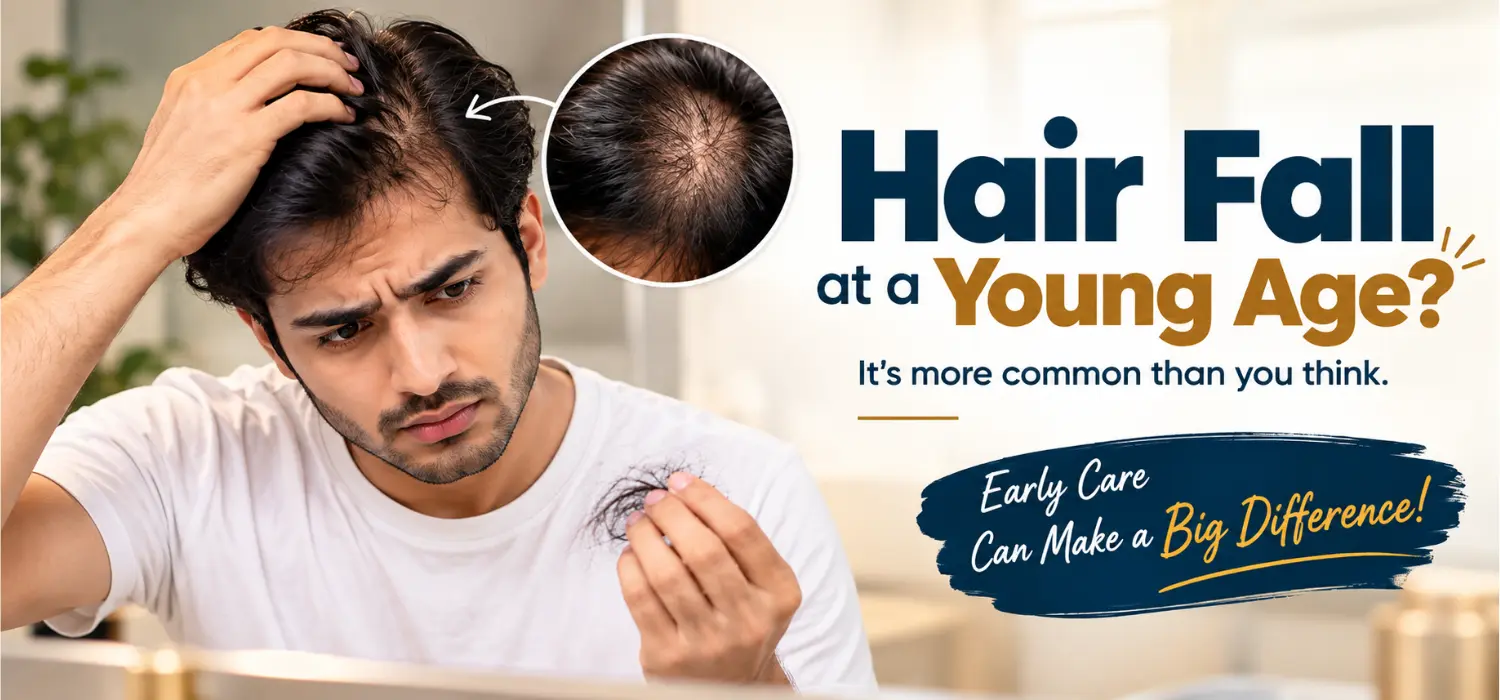
A few years ago, hair loss was mostly seen as a problem of middle age. Today, it is common to see college students and young professionals worried about a receding hairline, a widening parting or clumps of hair in the shower drain.
If this sounds familiar, take a breath. Hair fall at a young age is far more common than most people think, and in many cases it can be controlled or even reversed when it is identified early.
This guide explains what causes early hair loss, how to tell normal shedding from a real problem, and which treatments actually work.
What Is Hair Fall at a Young Age?
Hair fall at a young age means noticeable hair shedding or thinning that begins in your teens, 20s or early 30s. Everyone loses hair daily. Losing around 50 to 100 strands a day is considered normal, because old hairs fall out as new ones grow in.
It becomes a concern when:
- You see much more hair than usual on your pillow, comb or bathroom floor.
- Your parting looks wider or your scalp is more visible.
- Your hairline is moving back at the temples or forehead.
- Your hair feels thinner, weaker or has lost its volume.
- You notice round, smooth bald patches.
Common Causes of Hair Fall in Young People
Early hair loss rarely has just one cause. Here are the most common reasons.
1. Genetics (Androgenetic Alopecia)
This is the leading cause of hair loss in young men and a common one in women. If your parents or grandparents had early thinning, you may be more likely to experience it too. It is driven by sensitivity to the hormone DHT, which gradually shrinks hair follicles.
2. Stress and Lack of Sleep
Long study hours, work pressure, late nights and emotional stress can push a large number of hairs into the shedding phase. This is known as telogen effluvium, and the hair fall usually appears two to three months after the stressful period.
3. Nutritional Deficiencies
Crash diets, skipping meals and unbalanced eating can leave your body short of iron, vitamin D, vitamin B12, zinc and protein. Hair is one of the first things to suffer when nutrition is poor.
Vitamin D deficiency is especially common in India, even in sunny cities.
4. Hormonal and Medical Conditions
Thyroid problems and PCOS are frequent hidden causes, particularly in women. Autoimmune conditions like alopecia areata can also cause sudden patchy hair loss.
5. Scalp Problems
Severe dandruff, fungal infections and scalp inflammation can weaken hair roots and increase shedding.
6. Hair Care Habits
Frequent heat styling, chemical colouring, straightening, very tight hairstyles and harsh shampoos can damage hair and cause breakage or traction-related loss.
7. Illness, Medication and Lifestyle
High fever, viral infections, sudden weight loss, certain medicines, smoking and heavy alcohol use can all trigger temporary or long-term hair fall.
How to Know If It Is Normal Hair Fall or Something Serious
Seasonal shedding, especially during monsoon or after a fever, often settles on its own within a few months.
It is time to see a doctor if hair fall lasts more than two to three months, if you are losing hair in patches, if your hairline is receding, or if the hair fall comes with tiredness, weight changes, irregular periods or scalp itching.
A simple test you can do at home is the gentle pull test. Hold a small bunch of about 50 to 60 hairs and pull lightly. If more than 5 to 6 hairs come out, it may be worth getting your scalp checked.
How Is the Cause of Hair Fall Diagnosed?
Random shampoos and supplements rarely fix the problem because they do not address the root cause. A proper evaluation usually includes:
- A detailed history covering diet, stress, medications, family history and hair care routine.
- A scalp examination, often with a dermoscope, to look at follicle health.
- Blood tests where needed, such as thyroid profile, haemoglobin, ferritin, vitamin D and vitamin B12.
Once the cause is clear, treatment becomes far more targeted and effective.
Treatment Options for Hair Fall at a Young Age
The right treatment depends on the cause and stage of your hair loss. Common options include:
- Medical treatment: Doctor-prescribed topical solutions and, in suitable cases, oral medications help slow hair loss and stimulate regrowth. These should only be taken under medical supervision.
- Nutritional correction: Treating deficiencies of iron, vitamin D, B12 or protein often reduces shedding noticeably.
- PRP therapy (Platelet-Rich Plasma): A small amount of your own blood is processed and the platelet-rich plasma is injected into the scalp to support follicle health and improve hair thickness.
- Mesotherapy: Nutrient-rich micro-injections delivered to the scalp to nourish weak roots.
- Treating the underlying condition: Managing thyroid disorders, PCOS or scalp infections often allows hair to recover.
- Hair transplant: For advanced, stable hair loss where follicles are permanently lost, a hair transplant can restore density using your own hair. It is usually considered only after hair loss has stabilised and other treatments have been tried.
Simple Habits That Help Prevent Hair Fall
Treatment works best when supported by everyday habits:
- Eat well. Include eggs, dal, paneer, nuts, seeds, green leafy vegetables and fruits in your daily meals.
- Manage stress. Exercise, meditation or even a regular evening walk can make a difference.
- Sleep 7 to 8 hours every night.
- Go gentle on your hair. Avoid excessive heat, tight ponytails and frequent chemical treatments.
- Keep your scalp clean. Wash regularly with a mild shampoo suited to your scalp type.
- Avoid smoking and limit alcohol.
- Do not self-medicate. Skip random online remedies and products without professional advice.
Hair Fall Treatment at Veda Skin and Hair Clinic, Kompally
Veda Skin and Hair Clinic in Kompally, Hyderabad, offers expert hair fall treatment for people facing early hair loss, hair thinning, dandruff and scalp problems.
Every patient begins with a detailed consultation and scalp analysis, so the treatment plan is based on the real cause of hair fall, whether it is genetics, stress, nutritional deficiency or a hormonal issue.
Depending on your needs, the clinic offers medical treatment, PRP therapy for hair fall, mesotherapy and hair transplant options, all focused on natural-looking, long-lasting results.
Patients from Kompally, Bowenpally, Suchitra, Medchal, Alwal and nearby areas visit for honest advice and dependable follow-up care.
If you are looking for the best hair loss treatment in Kompally, Hyderabad, book a consultation at Veda Skin and Hair Clinic to understand which treatment suits you best.
Conclusion
Hair fall at a young age can be stressful, but it is also one of the most treatable problems when you act early.
Understanding the cause, correcting your lifestyle and starting the right treatment at the right time can help you protect the hair you have and bring back thickness where possible.
If you have noticed more hair fall than usual for the past few months, do not wait for it to get worse. Book a scalp consultation today and take the first step toward healthier, fuller hair.
Frequently Asked Questions (FAQs)
1. Why am I losing so much hair in my 20s?
The most common reasons are genetics, stress, poor nutrition, vitamin deficiencies, hormonal issues and hair care habits. A scalp examination and basic blood tests can help find your exact cause.
2. Is hair fall at a young age reversible?
In many cases, yes, especially when it is caused by stress, deficiencies or scalp problems. Genetic hair loss cannot be cured completely, but it can be slowed and managed well when treated early.
3. How much hair fall per day is normal?
Losing 50 to 100 hairs a day is normal. If you are losing significantly more or seeing visible thinning, it is worth consulting a doctor.
4. Can stress really cause hair fall?
Yes. Severe or prolonged stress can push many hair follicles into a resting phase, leading to increased shedding a few months later. Hair usually recovers once stress is under control.
5. Which vitamin deficiency causes hair fall?
Low iron, vitamin D, vitamin B12 and zinc are common culprits. Do not start supplements on your own, as a blood test will show what you actually need.
6. Does frequent shampooing cause hair fall?
No. Washing removes hairs that were already shed. Using a mild shampoo regularly is good for scalp health.
7. Is PRP treatment effective for hair fall?
PRP can help improve hair thickness and reduce shedding in many people with early to moderate thinning. Results vary from person to person, and multiple sessions are usually needed.
8. When should I consider a hair transplant?
A hair transplant is suitable when hair loss has stabilised, and there is enough healthy donor hair. It is not the first option for early hair fall, and your doctor will guide you on timing.